
Durable Heat Storage Tank Designed for Renewable Energy Systems
As buildings shift toward electrification and low-carbon infrastructure, the role of a heat storage tank has become foundational rather than optional. Renewable energy systems such as heat pumps and waste-heat recovery do not always align production with demand. A high-performance thermal water tank solves this mismatch by storing usable thermal energy efficiently and releasing it precisely when required.
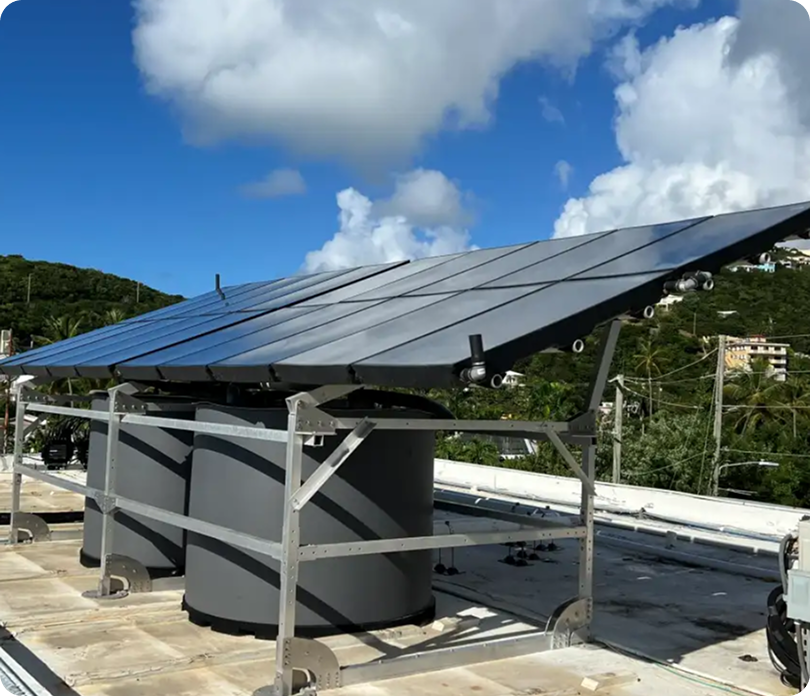
Modern thermal storage has evolved far beyond traditional steel vessels. Today’s thermal battery is engineered around durability, insulation performance, corrosion resistance, and long-term economics. This article explores how advanced heat storage tanks are built, why insulation materials matter, how durability affects reliability, and how lifecycle cost determines real value.
The Role of Heat Storage in Renewable Energy Systems
Renewable heating systems operate most efficiently when energy generation and energy use are decoupled. Heat pumps perform best during off-peak electrical windows. A heat storage tank acts as the stabilizing layer, allowing systems to charge when energy is abundant and discharge during peak usage. Unlike conventional hot water tanks that are designed for short dwell times, a thermal battery is engineered for repeated charge-and-discharge cycles without degradation. Water functions as a stable thermal medium, while energy is transferred to the load side through a dedicated heat exchanger. This approach increases system efficiency, reduces peak electrical demand, and improves overall system resilience.
Construction Philosophy: Strength Without Corrosion
Key construction characteristics include:
- Structural sidewalls formed from expanded polypropylene (EPP) foam with high compressive strength
- Non-metallic internal liners that isolate the working fluid from structural elements
- Flexible outer membranes that protect against UV exposure, moisture, and mechanical wear
Because these systems are unpressurized, they avoid stress fatigue, pressure-related failure, and the inspection burden associated with conventional steel tanks. This construction approach significantly extends service life while simplifying installation in tight mechanical rooms or rooftop locations.
Insulation Performance and Thermal Retention
Insulation quality determines whether stored energy remains available or slowly leaks into the surrounding environment. In thermal storage applications, poor insulation directly translates into higher operating costs and increased runtime for heat pumps or backup heaters. High-performance thermal water tanks use thick EPP foam insulation with industry-leading R-values. This dramatically slows heat transfer, allowing thermal energy to remain available for extended periods without constant recharging. Stable insulation performance over decades ensures that system efficiency does not decline with age, which is a critical factor in lifecycle cost analysis.
Durability and Corrosion Resistance by Design
Corrosion resistance is achieved through:
- Fully non-metallic structural components
- Internal liners that prevent mineral interaction with the tank body
- Polymer-based heat exchangers that resist chemical and thermal degradation
Because the working fluid inside a thermal battery never leaves the tank, minerals are introduced only once during initial fill. This design prevents scale buildup, reduces maintenance, and supports multi-decade operational lifespans.
Lifecycle Cost: The True Measure of Value
First, cost alone does not define economic performance. Lifecycle cost includes installation, energy losses, maintenance requirements, and replacement frequency. This is where modern heat storage tanks consistently outperform conventional alternatives. A well-engineered thermal battery lowers total cost by reducing installation labor, minimizing heat loss, extending service life, and enabling upstream equipment downsizing. When paired with heat pumps, additional storage capacity smooths demand spikes, allowing smaller heaters and lower electrical infrastructure costs across the system.
Performance and Design Comparison for Modern Heat Storage Tanks
| Design Attribute | Modern Heat Storage Tank | Conventional Steel Tank | Why This Matters |
|---|---|---|---|
| Structural Material | Engineered EPP foam and thermoplastics | Carbon or stainless steel | Eliminates corrosion risk and extends operational life |
| Insulation Performance | R≈18 stable over lifespan | Degrades over time | Preserves stored thermal energy and lowers operating cost |
| Corrosion Resistance | Fully non-metallic wet components | Prone to rust and scaling | Reduces maintenance and failure risk |
| Lifecycle Cost Impact | Low maintenance, long service life | Higher replacement frequency | Delivers lower total cost of ownership |
Material Science Behind EPP Foam Performance
EPP foam advantages include:
- Closed-cell structure that resists moisture absorption
- High impact and compressive strength for structural stability
- Stable insulation value that does not degrade with age
By combining structure and insulation into a single material system, modern thermal batteries reduce complexity while improving durability and efficiency.
Talk to our experts about your energy situation today.
Proven Reliability in Real-World Conditions
Engineering-Led Design You Can Trust
The Future of Heat Storage in Renewable Systems
1. What is a heat storage tank used for in renewable energy systems?
A heat storage tank stores thermal energy produced by renewable sources such as heat pumps, solar thermal collectors, or waste heat recovery. It allows energy to be captured when it is available and used later when demand increases, improving overall system efficiency.